Hardscaping in South Jersey: Costs, Materials, and What Actually Holds Up
Hardscaping in South Jersey: Costs, Materials, and What Actually Holds Up
Hardscaping in South Jersey refers to the non-living structural elements added to outdoor spaces, including patios, retaining walls, walkways, driveways, and fire pit areas. Done right, it extends your usable outdoor square footage, increases property value, and handles the region's specific drainage and weather challenges.
South Jersey sits in a climate zone where you deal with hot, humid summers, freezing winters, and significant rainfall. According to NOAA climate data for New Jersey, the region averages around 46 inches of rain per year, which makes drainage planning a non-negotiable part of any hardscape project. Without it, water pools against your foundation, erodes soil, and cracks pavers within a few seasons.
Why South Jersey's Soil and Climate Shape Every Hardscape Decision
Before you choose a material or call a contractor, you need to understand what the ground is actually doing beneath your yard.
Much of southern New Jersey sits on the Atlantic Coastal Plain, a layer of sandy, porous soil that drains quickly but shifts under heavy loads. That matters because a patio or retaining wall placed on poorly compacted sandy soil will settle unevenly within two to three years. Contractors who skip a proper gravel base and compaction layer are cutting corners that will cost you later.
The freeze-thaw cycle is the other major factor. When water seeps beneath pavers and freezes, it expands and lifts individual stones out of alignment. Concrete without reinforcement cracks under the same stress. The University of Minnesota Extension's guide to freeze-thaw damage outlines this process clearly, and the mechanics apply directly to New Jersey winters where temperatures can swing 30 to 40 degrees in a single week.
Materials That Work Best in This Region
Not every material performs equally well in South Jersey's conditions. Here is a breakdown of the most common options, with honest trade-offs:
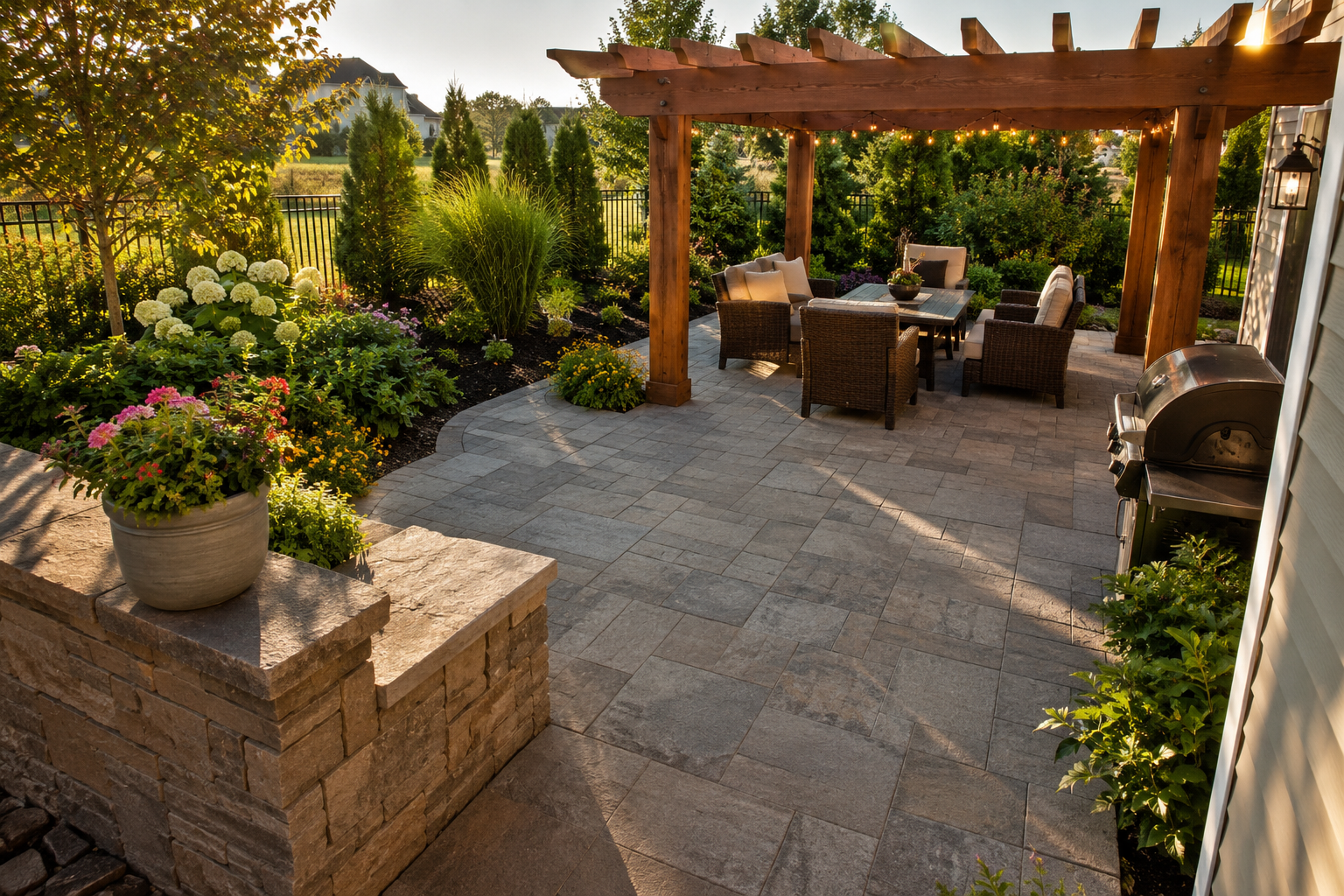
Concrete PaversPrecast concrete pavers are the most popular choice for patios and walkways in South Jersey. They interlock, which allows individual units to be replaced without tearing out the whole surface. They handle freeze-thaw cycles better than poured concrete, and you can find them at a wide range of price points.
Natural BluestoneBluestone is quarried in Pennsylvania and New York, making it regionally available and relatively affordable compared to imported stone. It has a classic look, handles moisture well, and holds up in heavy-use areas. It costs more than concrete pavers but adds significant curb appeal.
Poured ConcreteLess expensive upfront, but it cracks more easily in freeze-thaw conditions without control joints and proper reinforcement. Good for driveways when done correctly, but not ideal for patios if you want long-term low maintenance.
Permeable PaversGiven South Jersey's rainfall and New Jersey's stormwater management regulations, permeable paving options are gaining traction. They allow water to filter through the surface and reduce runoff, which matters in areas near wetlands or where municipalities restrict impervious cover.
What a Typical Project Costs in South Jersey
Labor costs in South Jersey fall within the broader Philadelphia metro market. Expect to pay between $50 and $90 per hour for skilled hardscape labor, with most mid-size patio projects running $8,000 to $25,000 depending on square footage, material choice, and complexity.
A basic 300 square foot concrete paver patio with a gravel base and basic edging runs roughly $5,000 to $8,000. Add a retaining wall, outdoor kitchen rough-in, or lighting, and you can push that number past $20,000 quickly.
Retaining walls carry their own cost structure. A segmental block retaining wall runs $25 to $50 per square foot of face area installed. Natural stone walls cost more, starting around $45 per square foot. If your wall exceeds four feet in height, many New Jersey municipalities require a permit and an engineer's stamp. Check with your local township before breaking ground.
Permits, Contractors, and What to Watch Out For
New Jersey requires permits for many hardscape projects, especially those involving impervious surfaces above a certain square footage or structural elements like retaining walls. The New Jersey Department of Environmental Protection sets rules around wetlands buffers and stormwater, and local municipalities layer additional requirements on top of those.
Before hiring a contractor, verify the following:
They hold a valid New Jersey Home Improvement Contractor (HIC) license, required by the New Jersey Division of Consumer Affairs
They carry general liability and workers' compensation insurance
They provide a written contract with a scope of work, material specifications, and payment schedule
They pull permits when required, not skip them to save time
Red flags include contractors who ask for more than 30% upfront, refuse to provide insurance certificates, or cannot name the specific materials they plan to use. Get at least three written quotes for any project over $5,000.
Things to Know
South Jersey's sandy coastal plain soil requires a deeper compacted gravel base than you might need in other parts of the state, typically 6 to 8 inches minimum under a patio.
Many townships in Burlington, Camden, and Gloucester counties have specific impervious cover limits, meaning you may only be able to cover a percentage of your lot with hard surfaces.
Polymeric sand, the jointing material between pavers, needs to be replaced every 5 to 10 years and should be resealed periodically to prevent weed growth and ant damage.
The EPA's Water Sense program recognizes permeable hardscaping as a tool for residential water management, which can be relevant if you are applying for certain green building incentives.
Always confirm whether your property falls near a NJDEP-regulated wetland before starting any excavation. Violations carry significant fines.
Frequently Asked Questions
Q: Do I need a permit for a patio in South Jersey?
It depends on your municipality and the size of the project, but many South Jersey townships do require permits for patios above a certain square footage or within buffer zones.
A basic small patio on a residential lot may fall under your town's threshold, but anything near a wetland, above 400 square feet, or involving drainage changes typically triggers a permit requirement. Call your local zoning office before starting any work.
Q: How long does a paver patio last in New Jersey's climate?
A properly installed concrete paver patio in South Jersey can last 25 to 30 years with basic maintenance.
The key word is "properly installed," meaning adequate base depth, compacted gravel, and quality polymeric sand joints. Shortcuts at the installation stage show up as settling and heaving within five years.
Q: What is the best material for a South Jersey driveway?
Asphalt and poured concrete are the two most common driveway materials in South Jersey, with asphalt being more flexible in freeze-thaw conditions.
Concrete is more durable long-term but costs more upfront and requires control joints to manage cracking. For larger driveways, concrete pavers offer a premium option with easier long-term repair.
Q: Can hardscaping help with my yard drainage problems?
Yes, the right hardscape design directly addresses drainage by directing water away from the foundation and off the property.
Graded patios, channel drains, dry creek beds, and permeable surfaces all reduce standing water issues. A contractor who understands South Jersey's rainfall patterns should include drainage as part of the base design, not treat it as an add-on.
Q: When is the best time of year to install hardscaping in South Jersey?
Spring and fall are ideal seasons for hardscape installation in South Jersey, when temperatures stay between 40°F and 80°F.
Extreme heat causes polymeric sand to cure unevenly, and installation in near-freezing conditions prevents proper base compaction. Most reputable contractors are booked heavily in spring, so scheduling early in the year is smart.
The Bottom Line on Hardscaping in South Jersey
Hardscaping in South Jersey requires more than choosing attractive materials. Success depends on proper site preparation, drainage planning, and installation methods that stand up to the region's sandy soil, freeze-thaw cycles, and changing weather conditions. Investing in quality craftsmanship today helps prevent costly repairs and ensures your outdoor space remains beautiful and functional for years to come.
Whether you're planning a new patio, retaining wall, walkway, or a complete outdoor living area, working with an experienced local contractor makes all the difference. EZ Hardscaping & Landscaping, Corp. provides professionally designed and expertly installed hardscape solutions throughout South Jersey, delivering outdoor spaces built for lasting performance, curb appeal, and everyday enjoyment. Contact our team today to schedule a consultation and bring your vision to life.
